


Kevin Warsh and the Battle for the Fed
October 28, 2026 | In this issue of The Institutional Risk Analyst, we ponder the remarkable tenure of Federal Reserve Chairman Kevin Warsh, both in terms of his actions and inaction. Next Monday we will release the latest version of the WGA Bank Top 50 for Q4 2026. The following Monday, we’ll release the update to the WGA Precious Metals Top 25, both for subscribers to our Premium Service.

Since winning Senate confirmation last May, Federal Reserve Board Chairman Kevin Warsh has made a number of important administrative changes to the central bank, but otherwise has been virtually invisible to the financial markets. This is intentional. He made clear that there is little that the FOMC can do about short-term inflation caused by the Iran war and has instead focused on the relatively mixed inflation data coming from the US economy.
Warsh has created five external task forces for a sweeping year-end 2026 review covering communications, the balance sheet, data, productivity, and inflation, while appointing new external and internal advisers. He streamlined policy statements, indicated that we wants to drop the idiotic forms of “forward guidance” like the dot plots, and elevated the focus on price stability in Fed public statements.

Warsh held the target for short term interest rates steady in June 2026 before leading a unanimous quarter-point rate hike in September 2026 to 3.75%–4%, shifting toward flexible decision-making and questioning standard inflation metrics. Some of the key staff changes have included:
Paul Winfree (Senior Transition Adviser): A conservative analyst formerly with the Heritage Foundation, known for crafting the Federal Reserve reform blueprint under Project 2025.
Daniel Heil (Senior Transition Adviser): A policy fellow from Stanford University's Hoover Institution, where Warsh previously worked.
Daniel Covitz (Adviser): A permanent internal appointment, Warsh elevated Covitz from his role as deputy director in the Fed's Research and Statistics division.
Eric Engstrom (Adviser): Another key internal promotion, Engstrom was brought in from his role as associate director in Monetary Affairs.
All of these decisions reflect Warsh’s cautious approach and also a recognition that he cannot simply make changes at the Board without developing some degree of consensus among the other governors and senior staff. In relative terms, Warsh is still very much an “outsider” at the Fed, opines one former staffer.
As we noted in our October 3, 2025 interview with Alex Pollock (“Interview: Alex Pollock on the Fed and Gold | Part I”) with respect to the changes to the Fed made by Mariner Eccles during the New Deal:
“Pollock: The Fed became a centralized body dominated first by the Board of Governors, but really by the chairman. So you got two centralizations going on here in the Fed after 1935. One is a centralization of power out of the rest of the country into Washington, into the Board. And the second is the centralization of power in the office of the Chairman of the Federal Reserve Board, who is the chief executive of that agency and for whom all the staff works. All the hundreds of PhD economists and everybody else all work for the Chairman. And so you get this much increased power of the Chairman hitting a peak, I will say, in the days when Greenspan became The Maestro.”
Warsh has five task forces out preparing recommendations and we expect them to 'report in' by year end. He surely is wary of announcing any new policy ahead of his task forces. That would undermine the purpose of the task force project. While the use of task forces was a good idea, they do 'handcuff him' for now. Look for big changes in 2027.
Warsh is trying to make monetary policy work better. He has no special mandate and, in fact, he comes to the job with a trail of resentment over how he was appointed, by whom, and where his sympathies and support 'may' lie - this despite or maybe because he has a solid 'hard money' reputation.
In fact, Warsh is less accepted and under more pressure than any Fed chair since The Accord was inked with the Treasury in 1951. The fact that he was nominated by the Orange Jesus is also a problem. Seeking support and consensus makes sense, given this lack of acceptance.
Warsh just witnessed -- as we all did -- the Nobel committee give the prize in 'Economics' to Michael Woodford of Columbia, the model builder who helped invent the very New Keynesian theory that Warsh rejects in the formulation of monetary policy.
Why is the Nobel committee insinuating itself into a US monetary policy debate? Because a spurned Fed economic policy staff is angry that speaking with THEM is not enough and angry over the use of task forces and angry that Warsh is rejecting the neo-Keynesian socialist policy framework that the staff all signed up for years ago.
The Board of Governors staff does NOT run policy. But they have become like Chinese Mandarins who think they do and who must deal with the periodic arrival of new 'Bosses' who they must disabuse of their idiosyncratic and quixotic ideas. In order to make real changes at the Fed, Warsh must tame and perhaps even remove the Fed's Mandarins.
Managing By Consensus
Although Warsh has the power to make unilateral changes at the Fed, he eschews the arbitrary approach so often taken by President Donald Trump and is instead seeking consensus – for now. Warsh has not directed Fed governors to reduce their public appearances, for example, even though by law Fed governors ought to focus their public statements on the consensus reached at the FOMC’s last vote.
Warsh voted with the committee consensus to hold the target for short-term interest rates steady in June 2026 and to raise rates in September 2026, though he did choose to abstain from submitting an individual projection in the Summary of Economic Projections (a/k/a the “dot plots”).
What Warsh has not done, however, is perhaps more significant. After the Federal Reserve voted in mid-September to raise interest rates a quarter point, the agency's new chair said that the Fed had "removed a dose of accommodation" but made clear that he does not see current policy as at all restrictive.
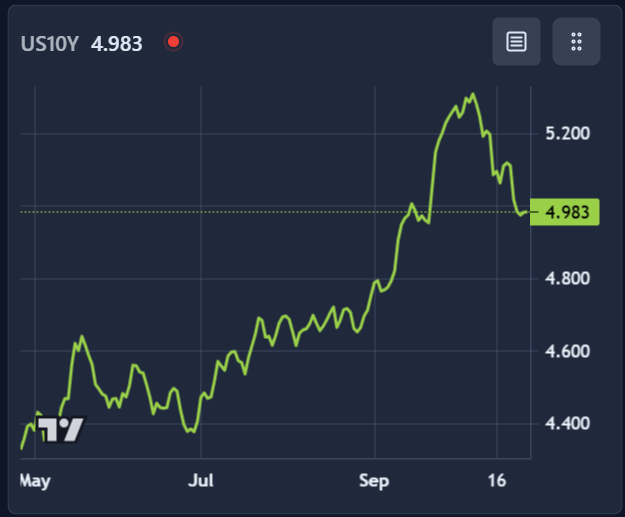
Warsh did not join Treasury Secretary Scott Bessent earlier this year in trying to talk down LT interest rates via repurchases of Treasury debt. Indeed, Warsh has stated that he wants to see what the bond markets do without interference from policymakers, noting that the Treasury's clumsy actions risk working at cross-purposes with the Fed's goal of controlling inflation.
Source: dataQollab
The Balance Sheet
Most mainstream economists still focus on the FOMC guidance regarding the target for Fed funds, but in fact the management of the Fed’s balance sheet and how it interacts with the US Treasury is far more significant. So far, Warsh and the members of the Federal Reserve Board (not the FOMC) have taken no action to significantly reduce the size of the Fed’s balance sheet or change its policy of reinvesting prepayments.
As its $2 trillion in agency mortgage-backed securities (MBS) run off or receive principal paydowns, the Federal Reserve reinvests those proceeds into U.S. Treasury securities—specifically Treasury bills via secondary market purchases. The bill purchases push down short-term interest rates, but do nothing to reduce long term Treasury yields. The Fed today is a net seller of MBS, but new issue MBS volumes are so low that it barely matters.

Source: dataQollab
The policy of reinvesting mortgage prepayments in T-bills is the opposite of an increase in the target for Fed funds by the FOMC, of note, raising an interesting question about the true intention of Warsh and the Fed staff when it comes to the balance sheet and monetary policy more generally.
If the Fed was really interested in tightening policy, it would simply allow the MBS to run off and not reinvest the proceeds, causing the balance sheet to shrink. If banks cannot hold reserves at the Fed, then they must go buy something else for liquidity management.
Since 2008, the Fed under Ben Bernanke, Janet Yellen and Jerome Powell bought trillions of dollars in Treasury debt and MBS. The period from 2008 through the confirmation of Chairman Warsh marked a remarkable period of progressive social and economic engineering that is unlikely to occur under the current Chairman. Specifically, the purchase of MBS forced down mortgage rates and pushed up home prices, resulting in a remarkable surge of inflation after COVID. The chart below shows the holdings of the system open market account from FRED.

Bill Nelson at Bank Policy Institute described what could be done to shrink the balance sheet in a recent missive:
"Chairman Warsh has made it clear that he wants the Fed to reduce the size of its balance sheet substantially. While there are several changes that could help the Fed shrink, there is one change that is essential: The Fed needs to conduct monetary policy so that the fed funds rate (or the repo rate) is meaningfully above the interest rate the Fed pays on the deposits of banks (the interest on reserve balances or IORB rate). Currently, the two rates are about equal, so the opportunity cost to banks of holding reserve balances is essentially zero. If the repo rate is a bit above the IORB rate, reserves will be costly for banks to hold. While there are other adjustments the Fed can make to reduce the size of its balance sheet, they will all have only modest effects unless banks have a positive opportunity cost for holding reserves."
Unless and until we see the Fed Board of Governors start to make changes to how the balance sheet is managed, Warsh is not really breaking from the bad old days of Bernanke, Yellen and Powell, when the FOMC engaged in all sorts of wishful thinking and social engineering when it comes to their mandate.
Since James Tobin engineered Operation Twist in February 1961 while serving as a member of President John F. Kennedy’s Council of Economic Advisers (CEA), progressives -- like his student Janet Yellen -- have been fascinated by the idea of yield curve control. But like many progressive economic policies taken as gospel at the Fed, it does not actually work in practice.
First, the Fed needs to push up fed funds and the repo rate, but leave the interest rate paid on reserves at current levels or perhaps even lower. If Warsh is truly serious about reducing the size of the balance sheet, then the Fed must enforce a spread between a positive interest rate paid on reserves and market rates.
Second, the Fed should stop reinvesting the proceeds of prepayments on MBS, which would be a clear sign that the Fed is breaking away from past efforts at "yield curve control" by the last three Fed chairs. Again, these efforts failed miserably. The Fed under Bernanke, Yellen and Powell caused a surge in home prices that are at the core of the affordability crisis.
The first change will put some downward pressure on short-term interest rates as banks shift from preferring reserves at the Fed to T-bills and repo for maintaining liquidity.
The Fed must pay interest on reserves in an "ample reserve" policy framework, but it should never pay more than 90% of the bottom of the range for the Fed funds rate. Likewise, the Fed should never pay more on reverse repurchase agreements than the yield on current issue T-bills.
The second change will result in an overall reduction in the size of the Fed’s balance sheet and reserves as ultra long-duration, low coupon MBS run off and the Fed’s purchases of T-bills slow. Net, net, short-term interest rates will probably rise, regardless of where the FOMC sets the target for Fed funds.
The real battle for the Fed will begin once the Warsh task forces report their findings at the end of the year. While the other members of the Board of Governors can complain about prospective changes or even resign in protest, the fact is that the Chairman of the Federal Reserve Board is the unilateral chief executive of the agency -- for now.
Progressives who don't like this fact can thank President Franklin Roosevelt and Mariner Eccles, but the Fed's legal protection may not last. For now a sitting President cannot remove a Fed governor. Yet as David Cole noted in The New York Review of Books, “Close Calls,” the argument regarding Executive authority over the central bank was decided by one vote and for largely irrational reasons:
"In Trump v. Cook, the majority ruled that the president does not have unilateral authority to remove governors from the Federal Reserve Board, even though in another case the same day, it recognized such an authority over virtually all other federal agencies. The Court identified no principled rationale for the distinction. It simply noted that the Federal Reserve is a successor of sorts to the First and Second Banks of the United States, which were independent of the executive. But those predecessors exercised substantially less authority than the Fed does today, so the agency’s historical provenance does not offer a rational justification for treating it differently from other agencies today."

The Institutional Risk Analyst (ISSN 2692-1812) is published by Whalen Global Advisors LLC and is provided for general informational purposes only and is not intended for trading purposes or financial advice. By making use of The Institutional Risk Analyst web site and content, the recipient thereof acknowledges and agrees to our copyright and the matters set forth below in this disclaimer. Whalen Global Advisors LLC makes no representation or warranty (express or implied) regarding the adequacy, accuracy or completeness of any information in The Institutional Risk Analyst. Information contained herein is obtained from public and private sources deemed reliable. Any analysis or statements contained in The Institutional Risk Analyst are preliminary and are not intended to be complete, and such information is qualified in its entirety. Any opinions or estimates contained in The Institutional Risk Analyst represent the judgment of Whalen Global Advisors LLC at this time, and is subject to change without notice. The Institutional Risk Analyst is not an offer to sell, or a solicitation of an offer to buy, any securities or instruments named or described herein. The Institutional Risk Analyst is not intended to provide, and must not be relied on for, accounting, legal, regulatory, tax, business, financial or related advice or investment recommendations. Whalen Global Advisors LLC is not acting as fiduciary or advisor with respect to the information contained herein. You must consult with your own advisors as to the legal, regulatory, tax, business, financial, investment and other aspects of the subjects addressed in The Institutional Risk Analyst. Interested parties are advised to contact Whalen Global Advisors LLC for more information.


Comments