


The FOMC at the Upper Bound
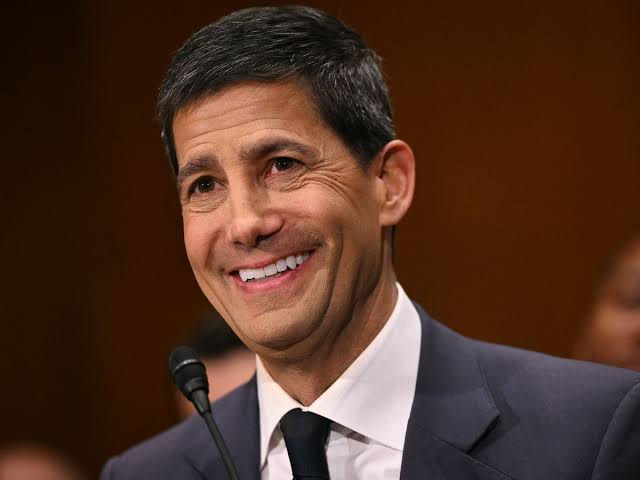
November 19, 2026 | Federal Reserve Chair Kevin Warsh said this week that the Fed will make high inflation "a thing of the past," AP reports, yet he still had provided no signal about the central bank's next steps. He talks, but without any action, and Chairman Warsh never mentions the budget deficit. Without action to back up the talk, Chairman Warsh has no credibility.
Warsh said Tuesday in Congressional testimony that AI investment is "the most striking feature of the economy right now" and added that the Fed is "monitoring the implications" for inflation and jobs, a remarkable statement given that the AI bubble is deflating. Warsh has not dealt with the Fed’s balance sheet or any number of other significant issues, but he wants the staff of the Board of Governors to “model AI.” Really?
Of course, modeling something as ill-defined and diverse as the new market for AI tools is pretty nigh impossible anyway, but the fact that Warsh thinks that this is something that is a good use of Fed staff time is troubling. Warsh seems to be entirely lost as Fed Chairman. Indeed, he reminds us of an earlier Fed Chairman, G. William Miller, who served for one year and five months before moving to the top job at Treasury after letting inflation run away.
G. William Miller was appointed chairman of the Board of Governors of the Federal Reserve System by President Jimmy Carter and served from March 8, 1978, to August 6, 1979. Before joining the Board of Governors, he was a Class B director at the Federal Reserve Bank of Boston and former CEO of Textron. He was a decent, honest business executive with no background in monetary policy.
For the longest time, our departed sire Richard J. Whalen and his conservative friends in Washington were convinced that the Carter White House had appointed the wrong Miller to the Fed in 1978. Because Miller could not even pretend an understanding of monetary policy, Jimmy Carter’s appointment of Miller as Chairman of the Federal Reserve in March 1978 was seen as a significant mistake.
“Mr. Carter had appointed G. William Miller as Federal Reserve chairman, who proceeded to engage in a very rapid monetary expansion,” wrote Richard W. Rahn in The Washington Times. “The inflation disaster caused by the excessive monetary expansion caused Mr. Carter to replace Mr. Miller with Paul Volcker at the very end of his administration.”
Wind the clock forward almost 50 years and we have a former Fed governor who is making similar mistakes to those of Miller – via inaction. Warsh does not seem to have a personal grasp of the Fed’s current policy priorities. For example, the debate over how to manage the Fed’s balance sheet – the most important policy question facing the central bank – has been ignored.
As we’ve noted before, if the Fed raises the target for Fed funds and overnight repurchase agreements, the rate paid on reserves should be left unchanged. Otherwise all of the earlier talk from Warsh about shrinking the balance sheet is nonsense. Can a credible Fed Chairman afford to look ridiculous, to borrow the great line from the 1972 Francis Ford Coppola film, "The Godfather?" No.
The fact that Warsh has not led the FOMC is raising short-term interest rates is another huge mistake. Sure, the FOMC cannot really tame the inflation from the Iran war, but by not responding to the obvious challenge, Warsh and the Fed have lost credibility. Plain and simple, as things stand today, Kevin Warsh does not matter to the financial markets.
Although the financial markets are still digesting the setback in the AI sector, the big and immediate risk facing the Fed and its chief client, namely the US Treasury, is market liquidity. Not only is there a vast amount of AI-related debt that must be repriced, but other sectors such as commercial and residential real estate are suffering from the relative move in interest rates since 2022.
According to a November 2026 report from BloombergNEF, approximately $13.4 billion of outstanding fixed-rate, dollar-denominated data center debt matures in 2027. While the next 24 months represent the beginning of the refinancing cycle, BloombergNEF notes that at least $1 trillion in broader data center borrowings will mature over the next five years through 2031.
Centralized Clearing of US Treasury Securities
Large as these numbers are, they are dwarfed by the amount of Treasury debt that must be issued and repriced over the next five years. For this reason, the approaching implementation by the U.S. Securities and Exchange Commission (SEC) rule for central clearing of Treasury transactions is notable, but nowhere to be found on the current agenda of Kevin Warsh.
Centralized clearing of Treasury securities was the brainchild of Federal Reserve Vice Chair Timothy Geithner and the Group of 30, who proposed a centralization of the Treasury market after the March 2020 collapse. The “dash for cash” had nothing to due with structural problems in the Treasury market and everything to do with do with investor fear and uncertainty regarding COVID.
In the Gospel of St Timothy, we are taught that centralized clearing of U.S. Treasuries does not directly increase the ultimate investor demand for holding government debt, but it “increases market liquidity, improves dealer balance sheet capacity, and lowers trading frictions.” But it does not make the debt more attractive to investors and has some significant downsides.
Under the SEC mandate put in place by former Goldman Sachs banker and SEC Chairman Gary Gensler, eligible secondary market transactions in U.S. Treasury securities must be cleared through a registered covered clearing agency (such as the Fixed Income Clearing Corporation [FICC], CME Group's CMESC, or ICE Clear Credit) by the following deadlines:
• U.S. Treasury Cash Transactions: Must be centrally cleared starting December 31, 2026.
• U.S. Treasury Repurchase Agreement (Repo) Transactions: Must be centrally cleared starting June 30, 2027.
Why is this a problem? Because centralized clearing does not enhance demand for Treasury securities and may actually constrain it.
Following SEC mandatory clearing rules, the cleared share of Treasury repos reached about 46% to 54% with non-affiliate fixed-term repos seeing around 46% centrally cleared as of Q1 2026 according to the Office of Financial Research, meaning roughly half of repo market activity remains non-centrally cleared.
More important, at least 70% to 80% of the cash secondary market in Treasury collateral has remained non-centrally cleared, as dealer-to-customer trades and a large portion of interdealer trading involving principal trading firms (which are not direct FICC members) stay outside central clearing.
“Compliance timelines for the cash market mandate rolled out around the end of 2025 into 2026, though transition and adoption are still progressing,” notes the Treasury. The U.S. Treasury's cash funding and borrowing needs have expanded significantly since 2022, driven by a growing national debt and larger quarterly net marketable borrowing requirements.
In late 2022, the U.S. Treasury estimated privately-held net marketable borrowing at roughly $550 billion. For the October–December 2026 quarter, the Treasury expects to borrow $618 billion in privately-held net marketable debt (with an anticipated end-of-quarter cash balance of $850 billion), and projects $800 billion for the January–March 2027 quarter.
Despite this growing financing need, SEC Chairman Paul Atkins has stated that ensuring a smooth transition to central clearing of U.S. Treasury securities is critical. In other words, the SEC is sticking with the December 2026 compliance deadline no matter how fragile the markets may be. What happens if even a small portion of the market that is not centrally cleared fails to cooperate? Interest rates go up.
“Transactions in the non-centrally cleared bilateral repo (NCCBR) market segment use neither a central counterparty nor a triparty custodian,” notes the OFR. “In 2022, we estimated that NCCBR has more than $2 trillion in outstanding commitments each day.”
Many of these participants in NCCBRs are foreign banks which will not agree to centralized clearing because they prefer to hold and lend the collateral internally. Yes, there are some very large, poorly funded European banks who prefer to stay in the world of bilateral, NCCBR markets. And these banks account for a lot of the marginal demand for US Treasury collateral.
There is no official percentage of investors who refuse to consent, because central clearing in the U.S. Treasury market is mandatory rather than optional for most covered transactions, notes the OFR. However, regulatory and market estimates show that roughly 23% of Treasury repo volume will remain uncleared under the SEC mandate due to specific structural exemptions.
As we progress into 2027, we think that investors and risk managers should recognize that the huge amount of debt issuance seen in the past several years, combined with the even larger funding needs for the US Treasury, are creating the conditions for a bond market breakdown -- just as investors are rotating out of equities into debt! Fed Chairman Warsh and SEC Chairman Atkins may be leading us all into the proverbial buzz saw.
Central clearing of US Treasury collateral does nothing to encourage investor demand and may actually discourage participation by large central banks and foreign financial institutions. Why are we doing this? Because a bunch of economists at the Fed and other agencies decided that centralizing the Treasury market is beneficial. But of course, we recall the golden rule we learned years ago at Bear, Stearns & Co, namely that somebody needs to sell a Treasury security to an investor.
As we noted in our last missive (“Is the Mortgage Sector the Next Systemic Event?”), the percentage change in interest rates since 2021 has already put the credit markets under enormous stress. This makes us wonder if Fed Chairman Warsh fully appreciates the fragility of the market situation. As the SEC is proceeding with its arbitrary decision to centralize clearing of Treasury securities in December, do we really want to push LT interest rates higher?
When you see large financial sponsors walking away from commercial loans and multifamily properties, and residential mortgage servicing rights displaying positive duration, that tells you that interest rates cannot go much higher without breaking something. We are at the upper bound of interest rates regardless of what the economists say. Perhaps that is why Kevin Warsh prefers inaction and happy rhetoric, because he knows that there are few other good alternatives.
"The FOMC flagged hedge fund leverage on three previous occasions this year and NDFIs came up on several occasions," writes Adam Josephson regarding the latest FOMC minutes. "Only one other time did the FOMC bring up prime brokerage exposures, and limited dealer intermediation capacity didn't come up before. The one other time dealer capacity came up it was described as increasing. As you know, prime brokers have been in the news in recent months thanks to Situational Awareness, etc. And Fed officials have been discussing Treasury market functioning with increasing frequency of late."


The Institutional Risk Analyst (ISSN 2692-1812) is published by Whalen Global Advisors LLC and is provided for general informational purposes only and is not intended for trading purposes or financial advice. By making use of The Institutional Risk Analyst web site and content, the recipient thereof acknowledges and agrees to our copyright and the matters set forth below in this disclaimer. Whalen Global Advisors LLC makes no representation or warranty (express or implied) regarding the adequacy, accuracy or completeness of any information in The Institutional Risk Analyst. Information contained herein is obtained from public and private sources deemed reliable. Any analysis or statements contained in The Institutional Risk Analyst are preliminary and are not intended to be complete, and such information is qualified in its entirety. Any opinions or estimates contained in The Institutional Risk Analyst represent the judgment of Whalen Global Advisors LLC at this time, and is subject to change without notice. The Institutional Risk Analyst is not an offer to sell, or a solicitation of an offer to buy, any securities or instruments named or described herein. The Institutional Risk Analyst is not intended to provide, and must not be relied on for, accounting, legal, regulatory, tax, business, financial or related advice or investment recommendations. Whalen Global Advisors LLC is not acting as fiduciary or advisor with respect to the information contained herein. You must consult with your own advisors as to the legal, regulatory, tax, business, financial, investment and other aspects of the subjects addressed in The Institutional Risk Analyst. Interested parties are advised to contact Whalen Global Advisors LLC for more information.


Comments